Tree removal in Port St. Lucie, FL
Need a tree taken down in Port St. Lucie, FL? Get a free quote from an independent local tree service. Ask for proof of insurance.
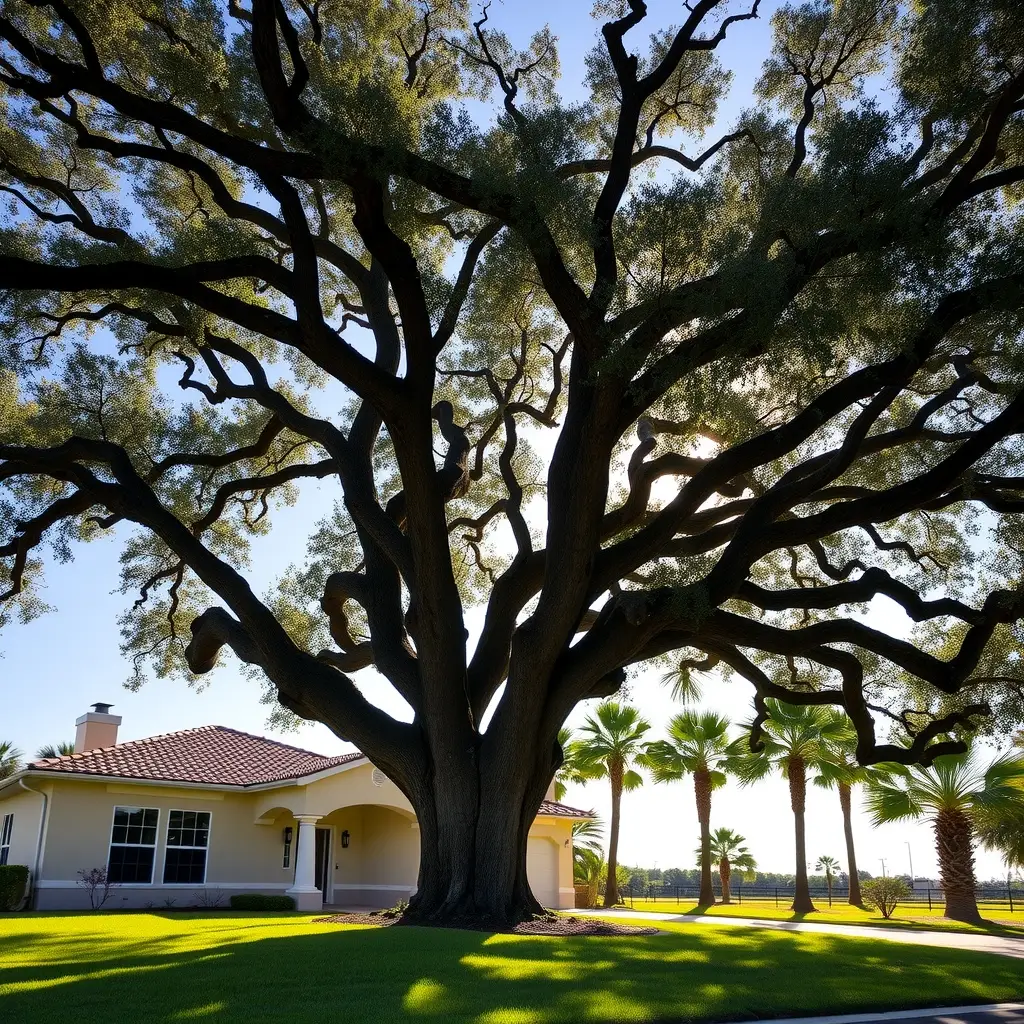
Most people call about tree removal after something has made them nervous. A big limb dropped in the yard, the trunk has a crack, mushrooms are growing at the base, or the tree leans a little more than it did last year. Removal is not always the answer, but when it is, it is a job to plan carefully because a falling tree can do real damage in seconds.
Signs a tree may need to come down
- The tree is dead or has large dead sections, with bare branches and bark falling away
- A lean that has changed, or soil heaving up on one side of the trunk
- Cracks or splits in the trunk, or a large hollow
- Fungus or mushrooms growing on the trunk or at the base, which can point to rot inside
- Roots lifting a driveway, pool deck or foundation
- Large branches that keep falling, especially over a roof or a play area
Trees that cause trouble locally
Laurel oaks are one of the most common removal jobs around Port St. Lucie. They grow fast and are popular in neighborhoods built in the 1970s through the 1990s, but they are not long lived, and they often decay inside while the crown still looks healthy. Pines can die from beetles or drought and then stand dead. Sabal palms and other palms are rarely dangerous as a whole but can lose heavy fronds or die from disease. Invasive trees such as Brazilian pepper are often removed on purpose.
How removal works
For a tree in the open, a crew can sometimes fell it in one piece. Near a house, a pool cage or power lines, they usually take it down in sections, lowering each piece with ropes or using a crane or lift. This is slower and costs more, but it protects your property. Ask whether stump grinding is part of the quote, because it often is not. See stump grinding for how that works.
Before you hire anyone
- Ask for proof of insurance, including general liability and workers compensation. If a worker is hurt on your property and the company has no coverage, that can become your problem.
- Get the quote in writing, with what is included such as cleanup, hauling and stump work.
- Ask whether a certified arborist has looked at the tree if the question is whether it needs to go at all.
Permits and rules
Rules depend on where you live. The City of Port St. Lucie runs a tree protection program through its Planning and Zoning Department. Its published materials describe protected trees as generally those 12 inches or more across at chest height, plus some native palms with enough clear trunk, and say removing one needs a permit. The city has also treated platted single family lots as exempt from those preservation rules, so the answer for a normal home lot may be that no permit is needed. This changes over time, so call the city to confirm for your address before work starts. Outside the city, the rules come from your county or town, so Martin County and Fort Pierce have their own.
State law adds a protection for homeowners. Florida Statute 163.045 says a local government may not require a permit, fee or mitigation to remove or trim a tree on residential property when the owner has documentation from a certified arborist or a licensed landscape architect that the tree poses a danger to persons or property. Keep that paperwork. Your HOA is a separate layer, and its approval may still be required.
What it costs
Price depends on the size and height of the tree, how close it is to buildings and power lines, how much access the crew has, and how much cleanup is included. A small, easy tree can cost a few hundred dollars. A large tree over a roof or near wires can run into the thousands. Cranes, tight spots and storm damage add cost. Treat any number you read online as a rough guide and get at least two written quotes.
If the tree has already come down in a storm, see emergency and storm tree removal. If you only need the tree shaped or lifted, tree and palm trimming may be enough.
Related services
We refer homeowners in Port St. Lucie, Tradition, St. Lucie West, Fort Pierce, Jensen Beach, Palm City, and nearby neighborhoods.