Tree trimming and palm trimming in Port St. Lucie, FL
Need tree trimming or palm trimming in Port St. Lucie, FL? Get a free quote from an independent local tree service. Ask for proof of insurance.
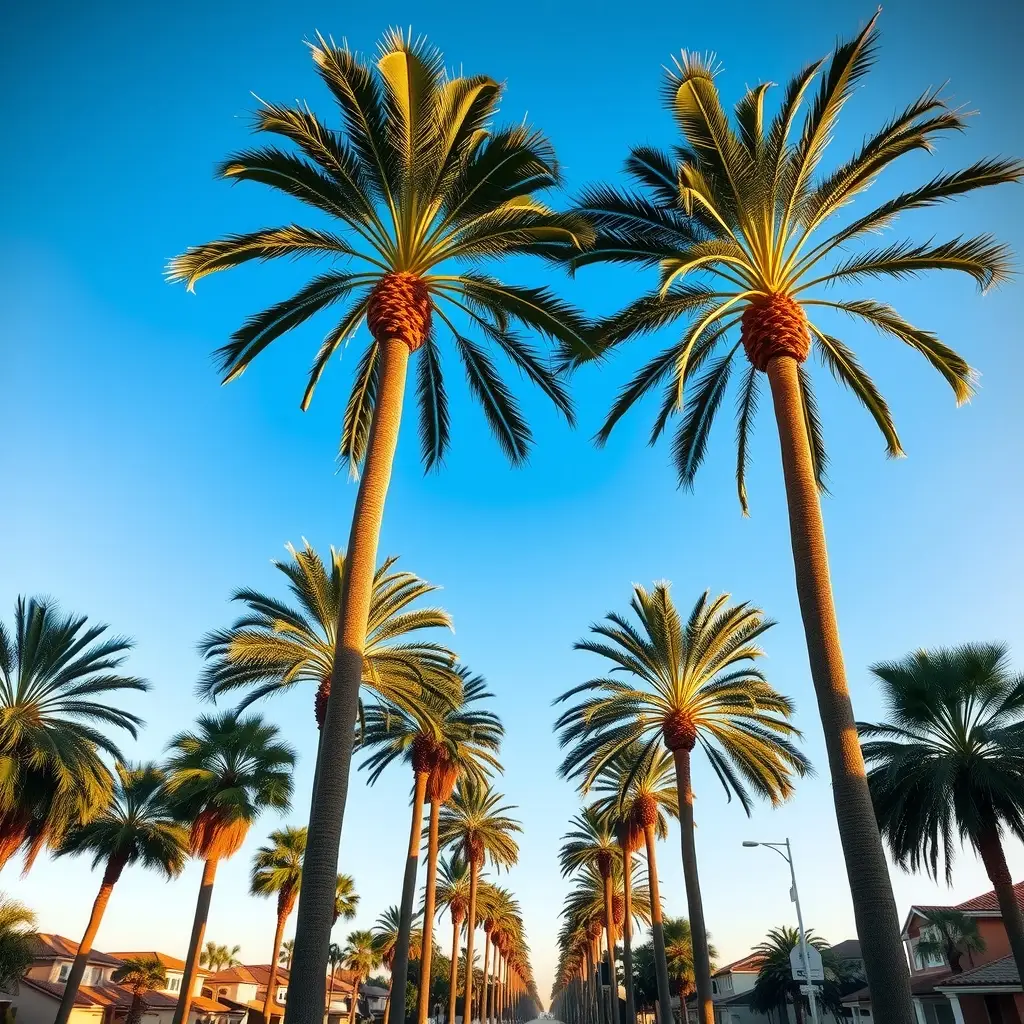
Trimming keeps trees healthy, keeps limbs off the roof and gives a yard more light. Done well, it makes a tree stronger. Done badly, it can hurt the tree or even speed up its decline. Knowing the basics helps you judge a quote.
Why people trim
- To lift branches off a roof, a screen enclosure or a power service line
- To remove dead or broken branches, which are the first to fall in a storm
- To thin a dense canopy so wind can pass through it more easily
- To bring back clearance over a driveway, sidewalk or street
- To tidy palms before storm season
Trimming oaks and other shade trees
Live oaks and laurel oaks are among the most common trees in the area. The usual approach is to remove dead wood, take off weak or crossing branches and lift low limbs, while leaving most of the canopy alone. Cutting too much at once stresses the tree. The old practice of cutting big limbs back to stubs, sometimes called topping, tends to cause weak regrowth and decay, and it is not what a good crew recommends. Ask the company how they plan to cut and where.
Trimming palms
Palms are different from oaks. They do not grow branches. They grow fronds from a single bud at the top, and if that bud is damaged, the palm dies. Dead and hanging fronds, old flower stalks and fruit clusters are fine to remove. Cutting off healthy green fronds so that only a small tuft remains, sometimes called a hurricane cut, is widely advised against by horticulture experts. It does not make a palm safer in a storm, and it can weaken the palm by removing the leaves it uses to make food. A modest trim that clears dead fronds is usually the better choice.
Tall palms are a risky job because of the height, so make sure the crew has the right gear and insurance.
Trees near power lines
Do not trim anything touching or near a power line yourself. Your utility has crews and rules for clearing around lines, and a private tree service has to follow safe distances too. If a branch is on a line, call the utility.
Permits and rules
Whether you need a permit depends on the tree, the lot and the jurisdiction. The City of Port St. Lucie regulates protected trees through Planning and Zoning, though it has treated platted single family lots as exempt, so call the city to confirm. Outside the city, county or town rules apply. Florida Statute 163.045 limits what a local government can require when a certified arborist or licensed landscape architect documents that a tree is dangerous. Your HOA may still need to approve the work. The full explanation is on the tree removal page.
Ordinary trimming usually does not need a permit, though heavy cutting of protected trees can. A homeowner with an arborist's documentation of danger also has the protection of state law, as noted above.
What it costs
Price depends on tree size, height, access, how much is cut and how much cleanup is included. A small tree or a few palms can be a few hundred dollars. Large oaks and tall palms cost more, sometimes well into the hundreds per tree or more. Ask the company to say in writing what will be cut and what will be hauled off.
If a tree is beyond saving, see tree removal, and for the stump afterwards, see stump grinding.
Related services
We refer homeowners in Port St. Lucie, Tradition, St. Lucie West, Fort Pierce, Jensen Beach, Palm City, and nearby neighborhoods.